
Heritage
Using Yesterday Today to Build Tomorrow
‘Building for the Future’: our Restoration Project
We are undertaking a major Restoration Project at St Andrew's Church. We estimate that it will take £6 million to complete. Work is ongoing and will continue over the coming years.
The aim of the project is to transform the building so that it will become:
* A Heritage Centre: to explore the history of the church and the community of Enfield
* A venue for Entertainment: concerts, plays, organ recitals and much more
* A Community Hub: open 7 days a week for the local community to find a place to meet, rest, chat and enjoy space together
* A place for Worship: fit for the 21st century, a creative place to worship God in comfort
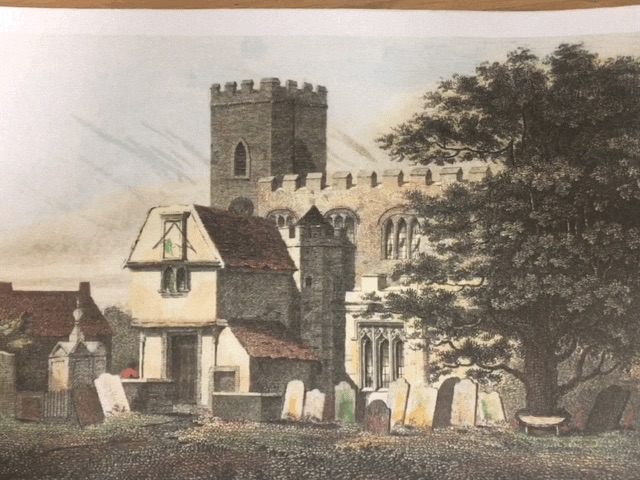
The project began in 2020. Given that St Andrew's is a Grade-II* Listed Building, the planning stages, permissions for work and actual work are immensely complex and time-consuming. As the project develops, more information will be added to this page.
The Restoration Project will improve the current building. However, it also incorporates a strong educational element. We want to chart the history of St Andrew's, from the 12th century to the present day. Information, when collated, is regularly added to this website. Over the coming years, we will also be making short videos on various aspects of the history. In addition, we will be offering educational tours when we are in a position to do so.
Thank you for your patience as we undertake this mammoth task! Please do check back on this website regularly for new and updated information.
If you have any information that would be useful, or photographs that could be used, please do contact Rev Dr Steve on steve@standrewsenfield.com
A Brief History
We are currently compiling a more complete history of the church. This is a work in progress, begun in July 2021, and we will continue to add to it as further information becomes available.

People often ask, “How old is St Andrew’s?” Nobody knows. Two clues, however, do exist which point to there being a Parish Church in Enfield at a very early date. We find the first clue in William the Conqueror’s Domesday Book of 1086 where a priest is mentioned as holding about 30 acres of land in Enfield. If a priest was ministering in Enfield in 1086, he presumably ministered in a church. An even earlier clue lies in the name of a Saxon Manor in Enfield – the name was Churchbury. But nothing is known about any church that may have existed in Saxon or Norman times.
The first written evidence of there being a Parish Church in Enfield dates from 1136 when St Andrew’s, along with a number of other neighbouring parishes, was endowed to the Monastery at Walden in Essex, now Saffron Walden. In 1190, Abbot Reginald of Walden appointed Robertus to serve as the first Vicar of Enfield.
The earliest known parts of St Andrew’s date from the years immediately following the appointment of Robertus. Part of the east wall of the church and the south wall of the sanctuary date from this period, including the lancet-shaped unglazed window in the south wall of the sanctuary, opening today into the Artillery Chapel. Originally, of course, this south wall formed the external wall of the church and there are even traces in this window aperture of the sockets for the iron framework of the glass.
It was around 50 years later when Bartholomew was Vicar that Godfrey de Beston gave “to God and the Church of St Andrew, Enfield and Bartholomew Vicar of that Church and all Vicars who succeed him” some two acres of land with the vicarage house upon it to the east of the Church. There is little doubt that the oldest part of the present vicarage, that which fronts Silver Street, formed the original Parsonage House. English Heritage have confirmed that part of the timbering at this end of the vicarage almost certainly dates from the 13th Century.

The 14th Century saw much restoration and major enlargements to the Church, including the construction of the north and south aisles (although the south aisle was much lower than the north, being raised to its present height only in 1824). The church tower is also 14th Century although much restored and altered in later years. The arches in the nave date from this same period. The pitch pine pews were installed after much argument and dispute in 1853; the oak clergy and choir stalls in 1908 as a memorial to Prebendary Hodson, Vicar of Enfield from 1870 – 1904, and the painting over the Chancel arch in 1923 as a memorial to the men of Enfield who died in the First World War.
A map of interesting things to look out for…

More History
Historic Information
We are in the process of creating a detailed history line. In time, this page will expand considerably.
Thank you for your patience as we undertake this work.
If you have any historical data relating to St Andrew’s that you would like to share with us, please do email Rev Dr Steve.
For at least 900 years, possibly longer, there has been Christian worship on the site that is now St Andrew’s, Enfield. Robinson, a historian of Enfield, suggested in 1823 that over 10,000 people have been buried in our churchyard.
We are proud of our heritage and history. But St Andrew’s is not a museum. It is a living, vibrant community of faith that seeks to serve the local community as faithfully now as it did all those hundreds of years ago.
But we can learn from our history, celebrating all that has been good and learning from the mistakes of the past too. Our strapline is “Church at the heart of Enfield.” Our Mission Statement is “Building Community Together on the Values of Jesus.” Our sense is that, although these are newly adopted phrases, both have been true of St Andrew’s Church since the first pioneer priest set foot within what are now the parish boundaries.
Origins – 11th and 12th centuries
In the Domesday Book of 1086, a priest is first mentioned as holding land in Enfield. In 1136, Geoffrey de Mandeville founded the Monastery of Walden (in what is now Saffron Walden), and that monastery was endowed with the tithes and revenues of Enfield (as well as other churches, of course). From this point onwards, the monks would have been responsible for providing pastoral care in Enfield.
The first Vicar of Enfield was Robertus de Enefelde, appointed in 1190. Thereafter, the monastery appointed all the Vicars of Enfield until Henry VIII dissolved the monasteries in 1536.
The parish was very large at the time – probably in excess of 15,000 acres. Given the fact that it was called St Andrew’s (a church name usually associated with the early phase of Christianity in Britain), it was likely to have been a Minster, serving the needs of the Royal Estate.
15th-Century
 Following the plagues and famines of the 14th-century, the 15th-century was an age in which people were obsessed with their own mortality and preparing for the afterlife.
As if to remind the community of their eternal fate, this large painting on wood hung above their heads in the main body of the church. It shows those who are saved entering heaven, whilst the souls of the lost are driven by demons into hell. A very graphic image that would no doubt have sharpened the minds of those who came to worship!
No surprise, then, that by the 15th-century, there were 8 altars in St Andrew’s, where prayers could be made for family members who had died. There were also two side chapels in the church; one dedicated to Our Blessed Lady (in the North aisle) and one dedicated to St. James (in the South aisle).
16th-Century
 In 1539, the dissolution of the monasteries was completed through an Act of Parliament. As a result, St Andrew’s left the ownership of Walden Abbey and was granted instead to Thomas Lord Audley of Walden (pictured right). When he died in 1544, the patronage of our church reverted to the Crown. King Henry VIII then passed the patronage on to Trinity College, Cambridge (who remain our patrons to this day and still appoint the Vicars, alongside the Bishop of Edmonton).
17th-Century
 At the beginning of the Civil War in 1642, Dr William Roberts, who had been Vicar since 1616, was ejected from the living. He was succeeded in 1646 by Dr Walter Bridges.
Bridges was clearly a good preacher. He was also fairly wealthy, earning money as he did from two acres of land that he owned, as well as from the income he received from tithes, weddings, baptisms and funerals.
During the time of Oliver Cromwell (pictured here), many citizens were opposed to paying tithes to the Vicar. Dr Bridges was just one of many Vicars who was having trouble collecting the money owed to him. In 1658, when Dr Bridges left the parish, he submitted formal complaints against many parishioners who had refused to pay their tithes; some for 11 years or more.
After Bridges left, the next Vicar was appointed (a year later): Danniel Manning, in March 1659. Like his predecessor, Manning also had problems with collecting his tithes. This was not a problem for too long, however, since he was deprived of the living following the Restoration of Charles II in 1660. Manning remained in Enfield and was buried at St Andrew’s in 1665.
18th-Century
 Under the guidance of Dr Robert Uvedale (pictured right), appointed Vicar in the 1720s, St Andrew’s underwent some major structural changes to the building.
The five bells had deteriorated, so they were recast in 1724, with an extra hundredweight of metal, and a sixth was added.
In the same year, the old gallery was extended and eight new pews were added. The front four pews were sold to parishioners for £15 and the remainder were sold for £8.
From 1728-1730, glaziers worked on lead and windows of the church, at a cost of £102.
 In May 1751, Mrs Mary Nicholls bequeathed the church an astonishing sum of £900 in her will. The money was used to purchase a new organ for use in worship, and thereafter to pay an organist. An organ builder, Mr Thomas Griffin, undertook the building work at a cost of £450. The first organist put on the payroll, under the authority of the latest Vicar, Rev James Whitehall, was Mr Philip Markham. However, his appointment was not to everyone’s liking and, two months later, an election was held for a new organist. Disgusted by this action, Phineas Patteshall (one of the churchwardens) refused to hand over the keys to the organ. Another warden, Mr Howell, threatened him over these actions and, to the relief of all, Patteshall eventually delivered the key to the Vicar.
19th-Century
 By the early 19th-century, the church had fallen into a terrible state of disrepair. It was proposed in March 1805 to spend the sum of £175 on general repairs. That proposal was rejected; more money would be needed – and a greater scope of work would need to be undertaken – to preserve the building for future use. It was therefore proposed to remove perished plaster from the outside and use that to fill the cracks where water was leaking in. More work on the fabric of the church would follow…
The bells were re-hung in 1808, and two more treble bells were added. In 1809, the ‘Cumberland Youths’ rang a celebratory peal of 5,084 changes in three hours and eight minutes.
In 1819, £560 was raised to build a gallery in the North aisle. At the same time, alterations were made to the North aisle windows and the pulpit.
Vandalism had been a problem at St Andrew’s for many decades. It was no different during this period. In May 1809, a reward of £10 was offered for information concerning who was smashing the headstones. In 1817, a reward of £5 was offered for information concerning the breaking of church windows.
It was not just vandalism that was a problem. In this period, there seemed to be general disrespect for the sacred space of church and churchyard. In 1821, the community was warned that hanging out clothes to dry in the churchyard would be punishable by prosecution. In January 1822, the railings at the front of the church, demarcating the churchyard from the Market Place as a means of protecting sacred space, were erected. The cost of the work was approximately £75. You can find a record of this here. In January 1824, a notice was put up, forbidding children to play in the churchyard.

In May 1824, work was undertaken by Mr Lochner to raise the South walls to the same height as the North walls, and for a gallery to be installed in the South side, matching the one in the North. Tenders were taken from Enfield tradesmen only, and £1,200 was raised to undertake this work.
The momentous nature of structural change in the first half of the 19th-century was breathtaking, considering the state of disrepair that had existed just three decades previously. In 1834, the church was cleaned and repainted. The screen at the East end was removed and replaced by a new, Gothic screen.
In 1853, the box pews were removed from St Andrew’s and replaced by the pews we have today. This was done in scandalous fashion by the Vicar John Moore Heath – against the wishes of the community, without any permission from Vestry or Diocese. You can read the sorry tale of the installation of the pews here.
You can find other stories concerning Rev John Moore Heath elsewhere on this site. Suffice it to say here that he really was the most detested Vicar, argumentative and confrontational. There was hardly anyone in the church, community or Diocese willing to support him. A sigh of relief went through the community when he finally left in December 1864, handing over the reins to Rev W.D. MacLagan as Curate-in-charge. Heath retired to Milland, near Haslemere. However, he technically remained Vicar of St. Andrew’s until 1870, when he was replaced by George Hodson. Heath died in 1882 and was buried in St Andrew’s next to Rev Daniel Cresswell.
Under MacLagan, further fabric changes were made to the church building in 1866-67. At a cost of £4,000, the roofs of the nave, chancel and aisles were replaced. New floors were laid throughout the church – floors that lasted only 7 years as a result of dry rot. The galleries were replaced. A stone pulpit was built, financed by Colonel Somerset of Enfield Court – much to the chagrin of F.G. Widdowes, the church architect, who distanced himself from such a poor design. Colonel Somerset also donated the rather ostentatious brass eagle lectern. The arched monument, built for Isabel Lady Lovell in 1530, was restored; financed by the Duke of Rutland, with restoration work undertaken by Messrs. Earp and Mr Pulling.
But still the fabric changes were not complete. A vote in the January 1880 Vestry Meeting approved the installation of a new organ in the church. However, such was the opposition in the community to the destruction of the old organ, it was hastily agreed to change the plans. Instead, the old organ casing was regilded and positioned at the West end of the church, whilst the organ console was repositioned to the St James’ Chapel in the South aisle.
It was not just the interior of the church building that was causing concern during this period. The churchyard surrounding the building had become full to capacity and was proving a health and safety concern. Originally one acre in size, but extended to two acres in 1846, there was no further room for burials. (By the mid-1850s, St Andrew’s was conducting over 100 burials per year). In 1857, the Headmaster of the Grammar School complained that, “the earth is completely saturated, no grave can be opened without disturbing human remains, [and] the water in the Grammar School well is impure and not fit for the boys to drink.” Part of the problem was that few people were willing to have family members buried in the new acre. Instead, they wanted their loved ones to continue being buried in, or near, existing family graves; numbering 257 family graves and 178 family vaults. In 1857, it was decided to discontinue burials in the old graveyard as well as inside the church itself.
20th-Century
20th-century
By 1908, the church building was in need of further repairs. Architect J. Oldrid Scott undertook the work, which cost £1,800. Seating was reduced by 178, mainly from the galleries which were also shortened. Interior plaster was removed from the walls near the chancel arch. The East window was raised by 3 feet, the organ was moved from the East end of the South aisle, being replaced by an oak screen. A new clock was installed in the Tower.
By 1930, the marked decrease in church attendance had become notable. Alongside that was a sharp decrease in financial giving. Within two years, it had been decided that the galleries were no longer required, and a legacy from Miss Chambers was used to remove them.
At the same time as the removal of the galleries, some other minor works were undertaken in the building. The Francis Evington monument was moved from the South gallery to its current position in the St James’ Chapel. The brass for John and Jane Smith was lifted from the floor of that chapel and placed on the wall. The oak board of donors, which was originally hung in 1772, was found behind the organ case in the West gallery. This was rehung in the North aisle. The door jambs to ‘the littell dore to St Jamys chapel’ (so mentioned in the will of Rev Edward Causton, Vicar of Enfield from 1466-1491) were uncovered. In 1932, Colonel Sir Henry Bowles gave permission for his great-grandfather’s memorial to move from the North to the South aisle.
Monuments
St Andrew’s, Enfield is deemed to have one of the finest collections of monuments outside of a Cathedral in Britain. Our incredible range of monuments chart a social history from ancient aristocrats, royalty and nobility, through post-Reformation merchants, influential politicians, Lord Mayors of London, pioneering medical professionals, to World War One heroes killed in action – and much more.
Our aim is to complete full research on each monument and make that information available on this website and in other formats. You will appreciate that this is a large piece of work that will take time to complete. We are grateful to our historian, Robin Barden, for providing the information on these pages. Robin’s is an ongoing research project, and we will be adding more information on a regular basis. So please do check back regularly for more information.
Listed below are the monuments in the church building at St Andrew’s. As the page develops, we will create a link to a separate page for each monument, with full written historical detail and a short video about it. Please bear with us as we create and upload this information.
You can also download a curated list of information about the monuments here. However, please be aware that this is being constantly updated and is not yet complete.


Hotchkis, Jane

Hunter, Sarah Ann

Keir, Mary Ann

Martin, John

Meyer, James

Meyer, Christian Paul

Meyer, Mary

Middlemore, Dorothie


Shaller, Edward

Sheffard, William

Smith, Arthur John

Sproston, William Norris


A brief social history
The oldest monument in St Andrew’s, the tomb of Lady Jocosa, was built in the dying days of a manorial system that had dominated local English life for over 600 years. However, this tomb reminds us that it wasn’t dead yet.
The influence and profitability of a manor may have waned significantly, but it could still lay claim to sufficient status and income. The inscription on Jocosa’s tomb makes sure to highlight her claim to estates which stretched across the English counties of Sussex, Surrey, Southwark, Hampshire, and Nottinghamshire.
But it would not last long. Following the bloodletting in the War of the Roses and the impoverishment by Henry VII of those nobles that remained, the movement of power away from the local Lords and towards the national institutions of the King’s court and government accelerated with such force that the manorial system was swept aside.
But the impoverishing of barons and the abolishment of the manorial system did not mean the end of nobility in England. Indeed, the narrative depicted on the arch above Lady Jocosa’s tomb depicts the story of how a minor family of no notable lineage – the Manners – established themselves in the upper echelons of society out of the ashes of the noble families Tiptoft and Roos.
This shift was caught up in interlinked political, cultural, and economic changes. These changes included an expanded role for local government, accountable to an increasingly centralised government; a shift in the relationship between Lord and tenant from a personal encounter to a more contractual association; and the drive to enclose parcels of common and other land into larger, privately held, landholdings.
In St Andrew’s, we also see the presence of another economic development which both impacted and benefited from this significant shift in the social fabric of local life – the rise of the city merchant.
Changing economic conditions and technological developments had enabled merchants to make increasingly large fortunes since the 14th-century. But within the older structures of society, merchants were a lowly profession far removed from noble lords in their manors and barons on the battlefield. However, in this quickly changing world the merchant’s money would start to talk; enabling him to rise to the very top of local, if not national, life.
The monument to Benjamin Deicrowe is a good example of how this change, which was to accelerate in the 17th- and 18th-centuries, had already started in the 16th-. The monument is telling for its unashamed declaration of Benjamin’s association with the City of London that leaves the viewer in no doubt that the charitable behaviour which marked him out as part of the gentry came not from a long lineage of noble families who had amassed vast wealth through the operation of multiple manors, but from the buying and selling of goods.
This new ability to obtain the differentiation and status of a noble gentleman through the correct consumption of wealth is further observed in the intimate connection between Sir Nicholas Raynton’s monument and the inheritance of Forty Hall. This was a manor house that was not part of any inheritance he was due as the third son of Lincolnshire farmers, but one he himself built with the fortunes he amassed by trading in fine cloth from Italy.
The Bolton monument provides a variation on this theme, glossing over the fortuitous use of the monies they had made in the city to offer a mortgage against that very status of gentility, the manor, which by ‘calling in’, they were able to acquire for themselves along with all its associated status.
The monuments to Charles Rich, Richard Fountaine, and Hinde Pyke affirm that similar claims to gentility through the appropriation of noble signifiers, such as charitable giving, continued well into the 18th-century. Unlike Charles and Richard however, Hinde did not make her money via the city but, it appears, was a beneficiary of her late husband’s dubious financial affairs.
Hinde’s monument also reflects the emergence of the nuclear family, that we see first with the monument to Martha Palmere. The foregrounding of inheritance we find on the monument of Lady Jocosa is replaced by the language of personal grief at the loss of a wife and mother. But while this ‘emotional turn’ may resonate with the modern ear, the way Martha is framed by both the inscription and the style of the monument itself is more problematic. Here the ‘role’ of wife and mother is exalted to impossible heights, setting up Martha, but also all women, as such virtues of goodness that no space is allowed for any other aspects of female identity. At the same time, the onlooker is reminded that even exalted as it is, this identity is itself always subservient to a women’s framing by her husband and father.
Similarly, the monument to Elizabeth Grene. Indeed, we would struggle to find an alternative female voice on such a public artefact as a monument. But we are fortunate to have access to the works and story of Lady Mary Wrothe through the coffin plate of her son, James.
Stories from our history
If you have any interesting stories relating to St. Andrew’s history that you would like to share with us, please email Rev Dr Steve.
16th-Century
Dr Thompson: an angry Vicar and a Bible
 In 1535, the first complete printed Bible in English was published, translated by Miles Coverdale. Whilst most people delighted in having the Bible in their own language, there were some who strongly opposed this modern way of doing things! None more angry than the Vicar of St. Andrew’s, Dr Thomas Thompson.
Thompson had been Vicar since 1504, and was in the twilight years of his ministry. By all accounts, he was a bit of a grumpy old man and opposed any new reforms in the Church.
When people in Enfield started using English versions of the Bible, he called it “a new learning” and “a green learning that will fade away.” For Thompson, anyone who used an English Bible was a heretic.
A parishioner called John Hamon was heard by Thompson reading the English Bible aloud – so Thompson called the local constable to stop him. The constable said to Hamon, “This must be left, for I am sent by the honest men of this parish to warn you to leave your reading, for you cause others to hear you; it were better that they prayed on their beads than thus to come about you.”
On Easter Day 1539, Hamon came to St Andrew’s to worship. Dr Thompson first heard his confession – and then told the parishioners what he had confessed! He told the congregation to avoid Hamon, saying, “I have read all the heretics, yet he passes them all; therefore, leave his company.”
Hamon appealed to Thomas Cromwell for help – but it was a lost cause, since Cromwell was executed by Henry VIII the following year and new laws were passed, forbidding the reading of the Bible by common people.
Leonard Chambers: another grumpy Vicar and a pile of meat
 Rev Leonard Chambers became Vicar in 1579 – and wound people up from the start of his ministry here!
In the Market Place, just outside the churchyard, there was a Sunday meat market. Chambers strongly opposed this Sunday trading and, alongside his Curate Rev Leonard Thickpenny, tried to abolish the meat market. Their first port of call was to engage legal eagles to see what could be done about it. But despite lots of words and legal letters, nothing had changed over the next two years.
Then a Justice of the Peace, Robert Wroth, got involved. He gave fearsome speeches in the market to put off the traders. The churchwardens did the same. Even Archbishop Whitgift and the Bishop of London got involved!
But, it seems that Robert Wroth was being disingenuous. As much as he was opposed to Sunday trading, he seemed to dislike Rev Leonard Chambers more! On 11 December 1884, an attempt was made by the Vicar to close the meat market – but this time, Wroth spoke out in favour of it, and prevailed.
One week later, a butcher from Tottenham turned up with an ox to sell and laid out his slabs of meat on a stall. Wroth stood by and did nothing. Vicar and Curate – Chambers and Thickpenny – were incensed by this. Thickpenny was goaded on by Chambers “in a very outrageous manner, very evil-beseeming a man of the Church and one of his calling, in a madding mood, most ruffian-like.” The Curate rushed out into the Market Place, overturned the butcher’s stall, and threatened to kill the butcher if he picked up the meat to sell it.
378 Enfield households then signed a petition to get the meat market reinstated. They made plain their dislike of Chambers and Thickpenny, and how they wished each Sunday they could stay at home rather than go to church. They wanted the clergy out so that they could get back to worshipping God in peace and quiet – whilst having a convenient meat market to buy from too.
17th-Century
Sit in the right pew, please!
 In his book A Parish Near London, David Pym provides some very interesting information about the seating arrangements in the church in the mid-17th-century. It was clearly important to sit in the right place, and not have ideas above one’s station in life!
The front pew was reserved for Philip Herbert, Earl of Montgomery. The second pew was reserved for Sir Nicholas Slater, who owned the Manor House (where Pearsons is now situated). The third pew was for John Wroth, and the fourth was for Nicholas Rainton (who would build his house at Forty Hill) and his family.
Next in the seating came the other gentry of Enfield: John Deicrowe, John Banks (the bailiff), Hugh Mascall and Thomas Curtis. Then came the yeomen: Henry Loft, Henry Hunsdon the younger, Elizeus Wiberd, and Henry Hunsdon the elder.
Further back in the church was the seating for those who could afford a 2s per year rent e.g. Thomas Argent, Edward Matthews, Matthew Budden, Jude Hammond, John Tyballs, and William Fall.
As a rule, men sat in the South side of the church and in the gallery. Women sat in the North side, in the chancel and in other ‘out places’.
“Know your place…”
What funeral can you afford?
 In A Parish Near London, David Pym lists the cost of a funeral in the mid-17th-century.
- A burial without a coffin – 2d for the grave, 9d for the Vicar, and 10d for the Clerk
- Strangers to Enfield were charged double the above rate
- A burial with a coffin in a grave five feet deep – 4d for the grave, 18d for the Vicar, and 20d for the Clerk
- A burial in the church with the bell being tolled – 17s 2d
- A burial in the chancel – 32s 4d
18th-Century
A dispute about the organ
In May 1751, Mrs Mary Nicholls bequeathed the church an astonishing sum of £900 in her will. The money was used to purchase a new organ for use in worship, and thereafter to pay an organist. An organ builder, Mr Thomas Griffin, undertook the building work at a cost of £450.
The first organist put on the payroll, under the authority of the latest Vicar, Rev James Whitehall, was Mr Philip Markham. However, his appointment was not to everyone’s liking and, two months later, an election was held for a new organist. Disgusted by this action, Phineas Patteshall (one of the churchwardens) refused to hand over the keys to the organ. Another warden, Mr Howell, threatened him over these actions and, to the relief of all, Patteshall eventually delivered the key to the Vicar.
19th-Century
Robbery: a dangerous business…
 It was a brave person indeed who would rob a church in the 19th-century – the consequences were serious indeed…
In June 1820, the church was ransacked and robbed after the funeral service of John Vaughan, Earl of Lisburne. The discovery was made by William Cuffley, the Enfield beadle, at 2.00am. The three perpetrators had headed off to Ponders End, where they flagged down a passing wagon and ‘persuaded’ the driver to take them to Shoreditch with their loot.
A Bow Street patrolman, John Mead, was in hot pursuit. He caught up with them near Kingsland where he arrested one of the thieves. Leaving that prisoner with some passers-by, he pursued and arrested a second man. After having appeared at the Old Bailey, that second man was condemned to death for his part in the crime.
The pews no-one wanted…
(We are grateful for the research of David Pym in A History of Enfield: A Victorian Suburb for this information).
 Dr Daniel Cresswell, who died in 1844, was succeeded as Vicar by John Moore Heath (pictured left). A barrister by aspiration, although not vocation, Moore was renowned for his incisive and formidably argumentative nature. In short, he managed to alienate just about everyone in the parish! His profound hearing disability – and his subsequent usage of an ear trumpet – was not the only reason for his inability to listen to the arguments of other people…
Heath wanted to remove and destroy the 35 box pews from St Andrew’s. His plan was opposed by almost all of the box pew owners, as well as a selection of local magistrates. Nevertheless, Heath was determined to move ahead with his plan and enlisted architect John Piers St Aubyn to design a re-pewed church interior. In order to avoid opposition, he chose to finance the work by public subscription, thus avoiding the need for Vestry Meeting approval. He did not even apply for a Faculty from the Diocese.
When word got out about this plan for pews in the church, opposition grew fast and strong. Heath had very few supporters, but they decided, with Heath, to take matters into their own hands…
In the early hours of the morning on 12 October 1853, workmen arrived in Ponders End by train from Norwich. They were taken to St Andrew’s Church and, under cover of darkness, ripped out and destroyed every box pew in the church, bar that owned by James Meyer the magistrate. The wood was piled high in the churchyard (remaining there for many years to come) and the men from Norfolk caught the 6.30am train back home.
A Vestry Meeting was called for 20 October 1853 at which a resolution was put forward, lamenting the behaviour of the Vicar as “contrary to the known and expressed wishes of the majority of the parishioners.” James Meyer demanded the restoration of the pews but, since they had been so completely destroyed, a Committee was set up to investigate and make further recommendations.
So the parishioners could take a vote on how to proceed, a meeting was called in the nearby King’s Head pub. The actions of the Vicar were defeated by 281 votes to 92. Feelings became so heated that the Vicar and his Curate had to escape via the window, and flee the mob across the Bowling Green and into the Grammar School.
In November, an effigy was made of John Moore Heath and burned in the Market Place.
A fist-fight in the Vestry
 The supporters of Rev John Moore Heath could be counted, quite literally, on the fingers of one hand. One of his supporters was the Churchwarden John Riley Rignall (pictured right).
One Sunday in mid-1859, there was an argument between Rignall and a new churchwarden, Mr. Bosanquet, about who should take charge of the financial offertory from the service. Things soon got out of hand and it escalated into a fist-fight between the two men.
Rignall was arrested and brought before the magistrates at Enfield. Having had their pews destroyed by Rignall and the Vicar a few years previously, the magistrates (Edward Ford and Daniel Harrison) were certainly not predisposed to look kindly on Rignall. A third magistrate, Edward Busk, was brought in from Edmonton in an effort to provide some impartiality.
Rignall wanted to have his case tried in a higher court. Before things moved in that direction, a settlement was reached. From hereon in, the offertory would be looked after by the Vicar. Rev John withdrew from Bosanquet his charge of assault, and Bosanquet withdrew his charge of the same against Rignall.
Rignall was forced to apologise for his violent outburst.
Documents from Our History
We would like to make public as many historic documents as possible relating to the history of St Andrew’s. If you have any historic documents relating to St Andrew’s that you would like to share with us, please email Rev Dr Steve.
20th-century
1959: Grave Layout for the Eastern side of the churchyard
Undated: Grave Layout for the Northern side of Churchyard
Organ History

The Old Bridge Case as it appeared 1887 to 1952
1752
The organ was built at a cost of £500 by Richard Bridges who, it is believed, was trained in the factory of the renowned Renatus Harris. Though put in hand in 1752, it appears not to have been completed until the following year. In the Daily Advertiser 25 October 1753, we read, “We hear that the new organ made by Mr Bridge for Enfield church is to be opened on Sunday next with an anthem.”
1867
The organ was rebuilt and enlarged by Gray and Davidson and comprised 3 manuals with seven stops on the Great, 8 on the Swell, 5 on the Choir, one Pedal Stop and five Couplers.
1885
Gray and Davidson removed the organ from the West gallery and placed it in the South Chapel. The old case, probably due to height, was not used in the rebuild. This was preserved and erected against the West Wall. But in order to accommodate new, tiered seating, it suffered some mutilation in that about 18 inches forming the base or plinth below the panelling was removed. This no doubt was to maintain the original height, as it now rested on a tier some 18 inches higher than its former position.
1908
William Hill again removed the organ, rebuilding it in a special loft in the North Chancel aisle, the old Turret giving access. This was virtually a new organ with pneumatic (supply) action. Little remained of the old Bridge organ. It was given in memory of Joseph and Emma Mary Withers by their 3 grandchildren.
Acoustically, this last position was unfortunate, for the organ reached well up to the Ridge roof of the aisle and the sound was largely absorbed so that tones reaching the Nave were subdued.
1952
The organ was rebuilt by Kingsgate Davidson in its original position. This was done in memory of Rev Geoffrey William Daisley, Vicar of Enfield 1928-1939. He was a lover of music and had dreamt of such a scheme.
The scheme as first drawn up provided for an enclosed section to the Choir Organ but lack of space precluded this. Later, a small chancel organ was built within one of the arches.
2014
A new organ was installed, which is currently in use.
[Information and specifications to follow]

Console installed in 1952
Organists
| Mr Werner – 1753 | Marion and Michael Smith |
| Peter L’Evesque – 1823 | Graham Cory – 1989-1992 |
| Miss Leach – 1823-1862 | Dr Alan Morgan |
| Miss Cape – 1862 | Jonathan Marten |
| H.W. Stocks – 1895 | Geoffrey Cowan |
| Wm. Lee Jones – 1895-1929 |
Linden Innes-Hopkins – 2006-2014 |
| Alfred Flower – 1930-1962 |
Philip Shrimpton – 2014-present |
| Eric Pask – 1962 |
Choirmasters
| Rev Gregory Smart – 1853-1859 | Graham Cory – 1989-1992 |
| Arthur Carter – ?-1885 | Dr Alan Morgan – ?-? |
| Walter Chart – 1885-1895 | Jonathan Marten – ?-? |
| Wm. Lee Jones – 1895-1929 | Geoffrey Cowan – ?-? |
| Alfred Flower – 1930-1962 | Linden Innes-Hopkins – 2006-2014 |
| Eric Pask – 1962-? | Philip Shrimpton – 2014-present |
| Marion and Michael Smith – ?-? |
Specification of 1908 Organ
| Great | Swell | Choir |
| Open Diapason – 16ft | Open Diapason – 8ft | Dulciana – 8ft |
| Open Diapason – 8ft | Stopped Diapason – 8ft | Gamba – 8ft |
| Gamba – 8ft | Gamba – 8ft | Stopped Diapason – 8ft |
| Stopped Diapason – 8ft | Celeste (T.C.) – 8ft | Flute (Open) – 4ft |
| Flute (metal) – 4ft | Oboe – 8ft | Flautina – 2ft |
| Principal – 4ft | Principal – 4ft | Clarinet – 8ft |
| Twelfth – 3ft | Fifteenth – 2ft | |
| Fifteenth – 2ft | Bourdon – 16ft | |
| Mixture – 3 ranks | Mixture – 3 ranks | |
| Tuba (7in. pressure) – 8ft |
Double Trumpet – 16ft | |
| Cornopean – 8ft |
||
| Clarion – 4ft |
| Pedal | Couplers | Accessories |
| Open Wood – 16ft | Sw. to Ch. | 4 pistons to Gt. |
| Bourdon – 16ft | Sw. to Gt. | 4 pistons to Sw. |
| Gamba – 8ft | Sw. to Ped. | 4 Comp. Peds. to Gt. |
| Flute – 8ft | Gt. to Ped. | 4 Comp.Peds. to Sw. |
| Ch.to Ped. | 1 Double Acting Gt. to Ped. | |
| Sw. Octave | Lever Swell Pedal | |
| Sw. Sub Octave | Tubular Pneumatic Action Blower by Daines |
Specification of 1952 Organ
| Great | Swell | Positif | Pedal |
| Geigen (Old Gt. Gamba) – 8ft | Gamba – 8ft | Gedact – 8ft Old Gt. Flute | Chancel Bourdon – 16ft old Sw. |
| Dulciana – 8ft | Celeste – 8ft | Flute – 4ft from 1 | Sub-Bass – 16ft old |
| Stopped Diapason – 8ft | Stopped Diapason – 8ft | Diapason – 8ft from Gt. | Flute – 8ft from 2 |
| Clarabella (part new) – 8ft | Open Diapason – 8ft | Principal – 4ft new | Resultant – 32ft from 2 |
| Flute (open) – 4ft | Flute (new) – 4ft | Nazard – 2 2/3ft from 2 | Flute – 4ft from 2 |
| Diapason No. 2 – 8ft | Principal – 4ft | Piccolo – 2ft from 5 | Open Metal – 16ft from Gt. |
| Diapason No. 1 – 8ft | Flautina – 2ft | Bourdon – 16ft from 1 | Open Wood – 16ft old |
| Octave – 4ft | Mixture – 3 ranks | Spitz Cornet – III new | Octave – 8ft from 7 |
| Diapason – 16ft | Oboe – 8ft | Krummhorn – 8ft old | Trumpet – 16ft from Sw. |
| Twelfth – 3ft | Trumpet – 16ft | Tuba – 8ft duplexed from Gt. | Trumpet – 8ft from Sw. |
| Fifteenth – 2ft | Trumpet – 8ft | Trumpet – 4ft from Sw. | |
| Mixture – 17, 19, 22 | Clarion – 4ft | Trombone – 16ft duplexed from Gt. New bottom octave | |
| Tuba |
(10-12 on 5in. pressure) | Tuba – 8ft from Gt (12 and 13 on 7in. pressure) |
Specification of 2014 Organ
| Great | Swell | Choir | Pedal | Chancel |
| Bourdon – 16ft | Geigen – 8ft | Gedackt – 8ft | Open Diapason – 16ft | Stopped Diapason – 8ft |
| Open Diapason I – 8ft | Stopped Diapason – 8ft | Dulciana – 8ft | Subbass – 16ft | Spitz Flote – 4ft |
| Open Diapason II – 8ft | Viola da Gamba – 8ft | Gemshorn – 4ft | Bourdon – 16ft | Principal – 2ft |
| Stopped Diapason – 8ft | Voix Celeste – 8ft | Flute – 4ft | Principal – 8ft | Chancel on Great |
| Principal – 4ft | Principal – 4ft | Flautina – 2ft | Bass Flute – 8ft | Chancel on Choir |
| Wald Flute – 4ft | Suabe Flute – 4ft | Sesquialtera – II | Fifteenth – 4 ft | |
| Twelfth – 2 2/3ft | Fifteenth – 2ft | Posaune – 8ft | Trombone – 16ft | |
| Fifteenth – 2ft | Mixture – III | Octave Posaune – 4ft | Bass Trumpet – 16ft | |
| Fourniture – III | Oboe – 8ft | Tremulant | Posaune – 8ft | |
| Posaune – 8ft |
Double Trumpet – 16ft | Octave | Clarion – 4ft | |
| Swell to Great |
Trumpet – 8ft | Swell to Choir | Swell to Pedal | |
| Choir to Great |
Clarion – 4ft | Great to Pedal | ||
| Tremulant | Choir to Pedal | |||
| Sub Octave | ||||
| Unison Off | ||||
| Octave |
Specification of Chancel Organ (prepared for 1952)
| Unenclosed (Playable on Gt. Keys) | Enclosed (Playable on Sw. Keys) | Couplers |
| Open Diapason – 8ft | Dulciana – 8ft | Sw. Sub Octave |
| Principal – 4ft | Gamba – 8ft | Sw. Unison Off |
| Stopped Diapason – 8ft | Stopped – 8ft | Sw. Octave |
| Flute – 4ft | Gemshorn – 4ft | Sw. to POs. |
| Mixture – 12 & 15 | Sw. to Ped. | |
| Cornopean – 8ft | Sw. Oct. to Ped. | |
| Pos. to Ped. | ||
| Gt. to Ped. | ||
| Sw. Oct. to Gt. | ||
| Pos. to Gt. 16ft | ||
| Pos. to Gt. 8ft |
Tower Clock History
Thanks go to Jack Thornton for his research about our Tower Clock, and for looking after the clock on our behalf for many years.

The tower clock was installed on the second floor of the bell tower in December 1910, in a large wooden cupboard.
The makers, F.W. Benson of Ludgate Hill (see Note 1 below), were clearly proud of this fine example of Victorian engineering as the huge iron frame carries a brass plate with the inscription ‘Clockmaker to the Queen and Prince of Wales.’ This referred to Queen Victoria and Prince Edward, so the mechanism appears to have been made before 1901.
The wood rod pendulum beats 1.5 seconds and is coupled to a ‘dead beat’ escapement mounted in the flatbed frame. The pendulum weighs 100lb (47kg) and is about 8ft (2.5m) long. It passes down through a slot in the floorboards to the first floor, where fine adjustments of timekeeping rate can be made by adding or removing small weights, in the form of steel washers hung on a hook attached to the rod. For example, if the clock is losing 7 seconds a week, the addition of an 8-gram washer will correct the rate.
There is always a need for slight correction at least twice a year due to the change of temperature in the tower between summer and winter.
The escapement is coupled by bevel gears to a long vertical shaft, which reaches to the top of the tower, where a gearbox transfers the drive directly to the minute hands of the two dials.

NOTES
Note 1: In the 1850’s J W Benson opened premises at Ludgate Hill, with a steam powered clock factory nearby. He died in 1878, leaving two sons, Alfred and Arthur to continue the business. In 1879 the company was awarded a Royal Warrant by Queen Victoria, followed by those of Edward Prince of Wales and the Kings of Denmark and Siam. Manufacturing ended when the factory was bombed in WW2.
Note 2: In late Victorian times chemists were working to develop oils suitable for lubricating steam engines, initially using combinations of petroleum, animal and vegetable fats. Lubricating oils in use at that time included almond oil, coconut oil, fish head oil, lard oil, olive oil, rapeseed oil and whale oil.
The Bells of St Andrew’s
Bell ringing has been part of the story of St Andrew’s for centuries.
In 1724, the church’s five bells, which had deteriorated, were recast with additional metal and a sixth bell was added. In 1808, the bells were rehung and two further treble bells were added, giving St Andrew’s its ring of eight bells.
The following year, in 1809, the Cumberland Youths rang a celebratory peal of 5,084 changes in three hours and eight minutes.
The bells continue to be part of the worshipping life of St Andrew’s today, ringing out across Enfield for Sunday worship and other special occasions.
Interested in learning to ring?

Roll of Honour

St Andrew’s is unusual in that our War Memorial is the amazing mural on the chancel wall. However, we do have a Roll of Honour, which has been maintained as a list by successive vicars since the Rev R Howell Brown in 1914. Over time, and as the list has been transcribed, errors crept in. So when John Tanner started to try to find out more about the men who are commemorated, it proved something of a challenge. In the last ten years, names have been corrected and graves and memorials tracked down and photographed. Men who should have been included have been tracked down and added. There is still more to find – but we now have the results of over ten years’ research.
The original Roll of Honour was announced in the Parish Magazine in October 1915 in the following terms:
“Most of the congregation worshipping in St Andrew’s Church will have noticed the beautiful and very artistic ‘Roll of Honour’ containing the names of those who have given their lives for King and Country in the present War, among the sailors and soldiers for whom prayers have been asked in the Parish Church. It is the work of Miss Elspeth Clarke, of Wellington Road, who presented it to the Church.”
Clearly not everyone from the parish who served, and still fewer of those killed, will have been prayed for by the congregation. We have identified over 200 soldiers, sailors and airmen who died in the Great War, with addresses in the parish who do not appear on the original roll. We are in the process of adding them.
The opening of an old chest in the Artillery Chapel in the church revealed the original Rolls of Honour, which were long thought to have been lost. There are two rolls: a hand illuminated one, as described in the Parish Magazine of the time for 1914-1918, and a commercially bought one for 1939-1945, which appears to have been completed at different times and in different hands. Photographs of both are shown below.
For more information on the Roll of Honour, please contact Rev Dr Steve. You can also download the most up to date version, with more pictures and detailed information about the individuals commemorated, here.


Parish Registers
For enquiries about other years, please contact the Parish Office at steve@standrewsenfield.com.
On a very regular basis, we have enquiries from people who are working on their family tree. We want to do all we can to help – but we do not keep all the ancient registers at St Andrew’s.
Periodically, registers are lodged at the London Metropolitan Archives. Any enquiries relating to the following periods should be directed to the LMA:
Baptisms: March 1550 – July 1981
Marriages: March 1550 – May 1981
Burials: March 1550 – 1928 and 1945 – 1996
